

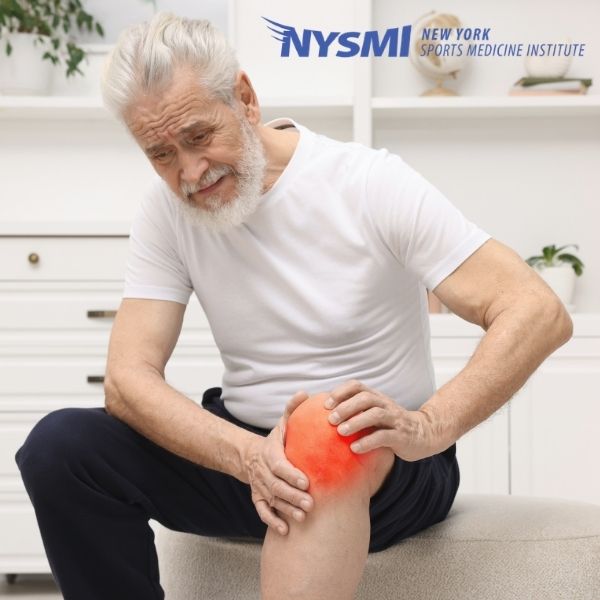
03 Nov Joint Pain During Colder Weather: When Chronic Symptoms May Signal a Surgical Issue
Every fall, the orthopedic team at New York Sports Medicine Institute sees the same pattern across the New York metro area. Temperatures drop, and patients who managed their knee, hip, or shoulder pain comfortably through the summer suddenly find that mornings are stiffer, stairs are harder, and old injuries have started speaking up again.
Most of the time, this is a seasonal nuisance. Sometimes it is the first clear sign that a joint has been quietly deteriorating all along. Learning to tell those two situations apart is the difference between waiting out another winter and getting a problem addressed while it is still straightforward to treat.
Why Cold Weather Makes Joint Pain Worse
Cold itself does not damage a joint. What changes in the winter is the environment around it, and a joint that is already compromised feels that change far more than a healthy one does.
Barometric Pressure and Tissue Expansion
When a cold front moves in, changes in barometric pressure may affect the tissues surrounding your joints. These subtle shifts can contribute to changes in tissue expansion and fluid pressure, potentially irritating nearby nerves. For joints already affected by worn cartilage, inflammation, or previous injuries, these changes may make existing discomfort more noticeable. Understanding how cartilage breaks down over time helps explain why some joints may be more sensitive to weather-related changes than others.
Stiffness and Reduced Activity
Cold also thickens the synovial fluid that lubricates the joint, so the first movements of the day take more effort. Add shorter days and less walking, and the muscles supporting the knee and hip lose conditioning at exactly the moment the joint needs them most. Weaker support means more load transfers straight through the joint surface.
Seasonal Aching or a Structural Problem?
Weather-related discomfort tends to be predictable and short-lived. It eases once you are up and moving, it responds to warmth and gentle activity, and it fades once the front passes. A structural problem behaves differently.
Symptoms Worth Having Evaluated
- Pain that persists for more than six weeks regardless of the forecast
- Swelling that returns after activity and does not settle overnight
- Catching, locking, or a sense that the joint is about to give way
- Night pain that wakes you or prevents you from sleeping on that side
- Loss of motion, such as difficulty straightening the knee fully or reaching overhead
- Pain concentrated in a single joint while everything else feels fine
Any one of these is worth an evaluation. Several together usually mean something mechanical is happening inside the joint, and no amount of warm weather will resolve it.
The Joints Where This Shows Up Most
Knee
Cold-weather knee pain in adults often traces back to cartilage wear or to a meniscus tear that never fully healed. A degenerative tear can stay quiet for years, then turn symptomatic once the surrounding muscle weakens. Whether that tear is better repaired or removed depends on where it sits, how it is shaped, and how much healthy tissue surrounds it.
Hip
Hip pain that worsens in the cold is frequently felt in the groin rather than the outer hip, and it often surfaces when a patient puts on shoes or gets out of a car. Impingement, labral tears, and hip arthritis all present this way, which is why the exam matters more than where the ache seems to be coming from.
Shoulder and Elbow
Shoulders stiffen quickly in winter, particularly in patients with rotator cuff wear or early frozen shoulder. Arthritis of the elbow is far more common in patients with a history of a prior injury, and the cold months tend to be when that old injury makes itself known again.
When Surgery Enters the Conversation
Surgery is not the starting point, and at New York Sports Medicine Institute it is never the default. Most patients improve with activity modification, physical therapy, injections, or bracing. An operation becomes reasonable when structural damage is confirmed on imaging; conservative care has been given a fair trial; and the joint is limiting work, sleep, or the activities that matter to you. When an operation is warranted, our surgeons favor the least invasive approach that will actually resolve the problem.
Schedule an Evaluation
If joint pain has escalated with the season, winter is a practical time to have it assessed. Imaging and surgical calendars are typically more flexible before the spring rush, and starting rehabilitation now means being ready when the weather turns. When you are ready, request an appointment online with New York Sports Medicine Institute today!