

02 Oct What to Expect During Recovery After Arthroscopic Joint Surgery: A Week-by-Week Guide
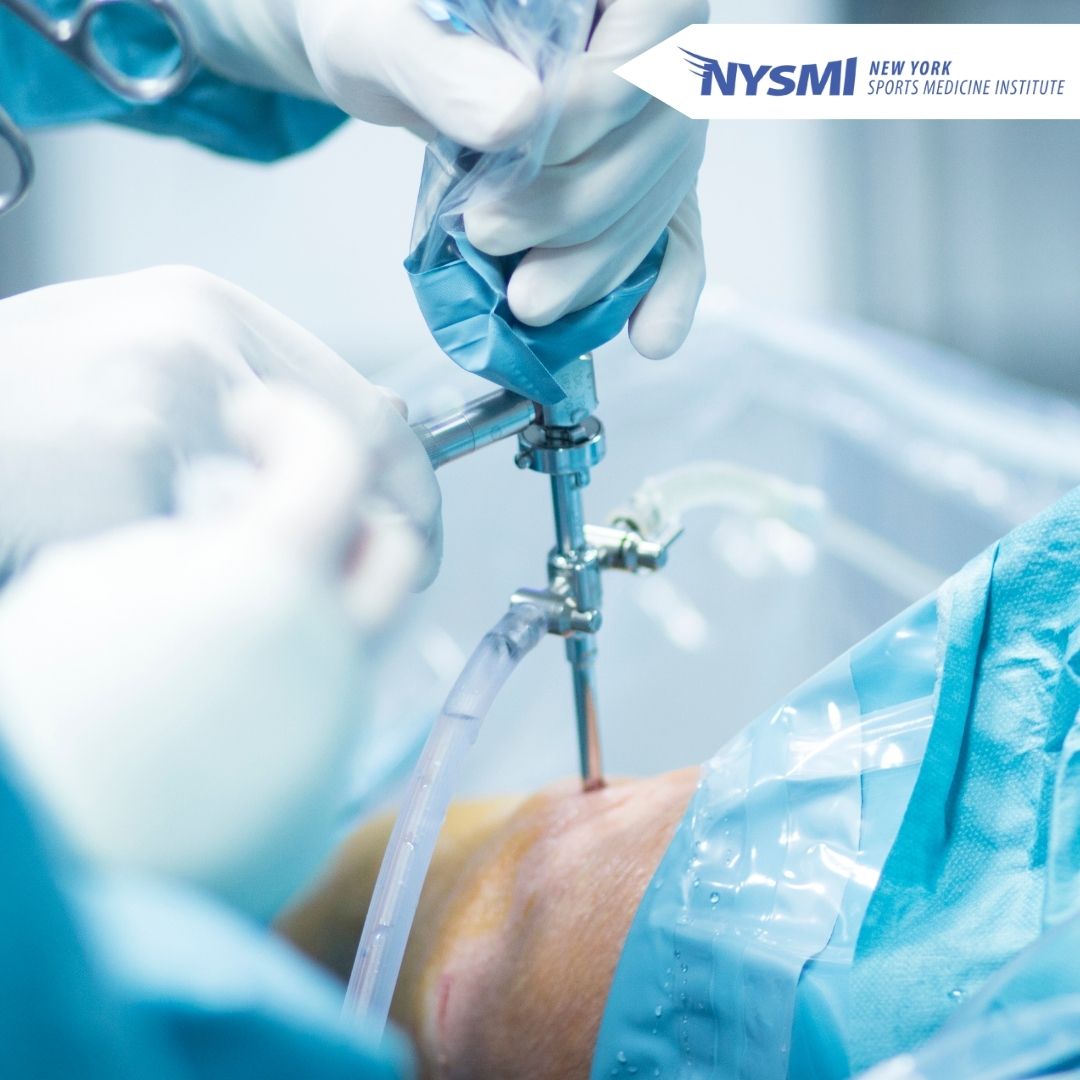
Arthroscopic surgery repairs damage inside a joint through small portal incisions and a camera, which means less soft-tissue disruption and an earlier start to rehabilitation than open surgery allows. It does not mean the joint is healed once the incisions close. The tissue repaired on the inside follows its own biological timeline, and that timeline is what actually governs your recovery.
Patients preparing for knee, hip, or shoulder arthroscopy at New York Sports Medicine Institute ask the same question almost every time: what will the first several weeks really look like? What follows is a general framework. Your surgeon’s protocol always takes precedence, because the specific procedure performed changes the pace considerably.
What Was Repaired Matters More Than the Incision Size
Two patients can leave the operating room with identical-looking incisions and follow completely different recovery paths.
Procedures that remove or trim tissue — a partial meniscectomy, a debridement, a loose-body removal — generally allow earlier weight-bearing and motion, because nothing has to knit back together.
Procedures that repair or reconstruct tissue — meniscus repair, rotator cuff repair, labral repair, ligament reconstruction — require protected healing. Expect crutches, a brace, or a sling for several weeks, along with limits on how far the joint is permitted to move.
Knowing which category your procedure falls into is the most useful thing you can carry home from your pre-operative visit. Arriving in strong condition helps as well, which is why pre-surgical conditioning is built into the plan.
Days 1 Through 7: Swelling Control and Wound Care
The first week centers on protecting the repair and controlling inflammation. Elevation, prescribed icing or a cold-therapy unit, and keeping the dressing clean and dry matter far more right now than early activity does. Swelling and bruising typically peak between days two and four, and the joint often feels stiff and full rather than sore in a familiar way.
Most patients begin gentle prescribed motion or muscle activation within the first few days, since early activation limits how much strength is lost. Desk work is frequently possible within a week after a lower-extremity procedure if the leg can stay elevated, though driving depends on which side was operated on and whether prescription pain medication is still in use.
Weeks 2 Through 3: Motion Before Strength
Sutures or adhesive strips usually come off at the first post-operative visit, and physical therapy becomes the main driver of progress. The priority in this window is range of motion rather than strength. Regaining full extension in an operated knee, or protected passive elevation in a repaired shoulder, prevents the kind of stiffness that is far harder to reverse later.
Swelling that flares after a therapy session is expected. Swelling that flares after ordinary household walking is a signal that you are moving ahead of the tissue.
Weeks 4 Through 6: Function Returns
By this stage, many debridement patients are walking without support and resuming low-impact conditioning such as a stationary bike or pool work. Repair patients are often weaning out of a brace or sling and starting supervised active strengthening. Fatigue is common here, because you are finally using the joint enough to feel how much strength was lost during the protected phase. Progress in this window tends to feel uneven from day to day, which is normal and not a setback.
Beyond Six Weeks: Sport-Specific Progression
Six weeks is a milestone, not a finish line. Cartilage, tendon, and ligament repairs continue maturing for months, and clearance to return to cutting, overhead throwing, or contact depends on measured strength, motion, and confidence rather than on the calendar. Return-to-sport timelines by joint cover what that later stage involves in more detail.
Signs That Warrant a Call to Your Surgeon
- Fever, or drainage and spreading redness at an incision
- Calf pain, or swelling that involves the entire lower leg
- Pain that escalates rather than gradually easing after the first week
- Sudden loss of motion you had already regained
- Numbness or tingling that persists after a brace or sling is loosened
Any of these findings warrants a call to the office rather than a wait-and-see week.
Plan Your Recovery With NYSMI
Recovery goes best when the surgery, the therapy, and the follow-up all sit inside a single plan. Our orthopedic sports medicine team coordinates arthroscopic care and rehabilitation across our New York City, White Plains, and Paramus offices, so your milestones are tracked by the same people who performed the procedure. Request an appointment to discuss your procedure and what your recovery will realistically require.